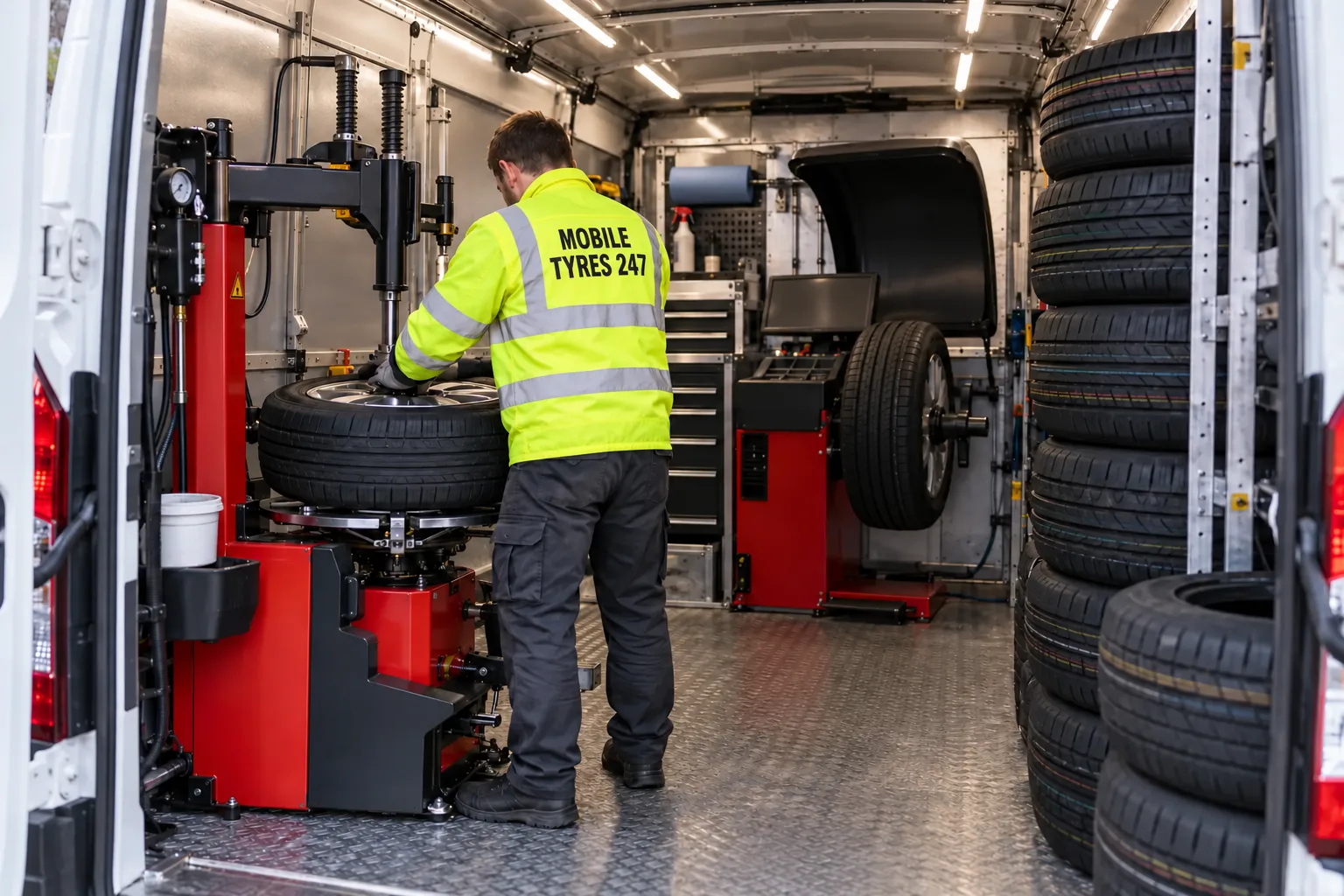
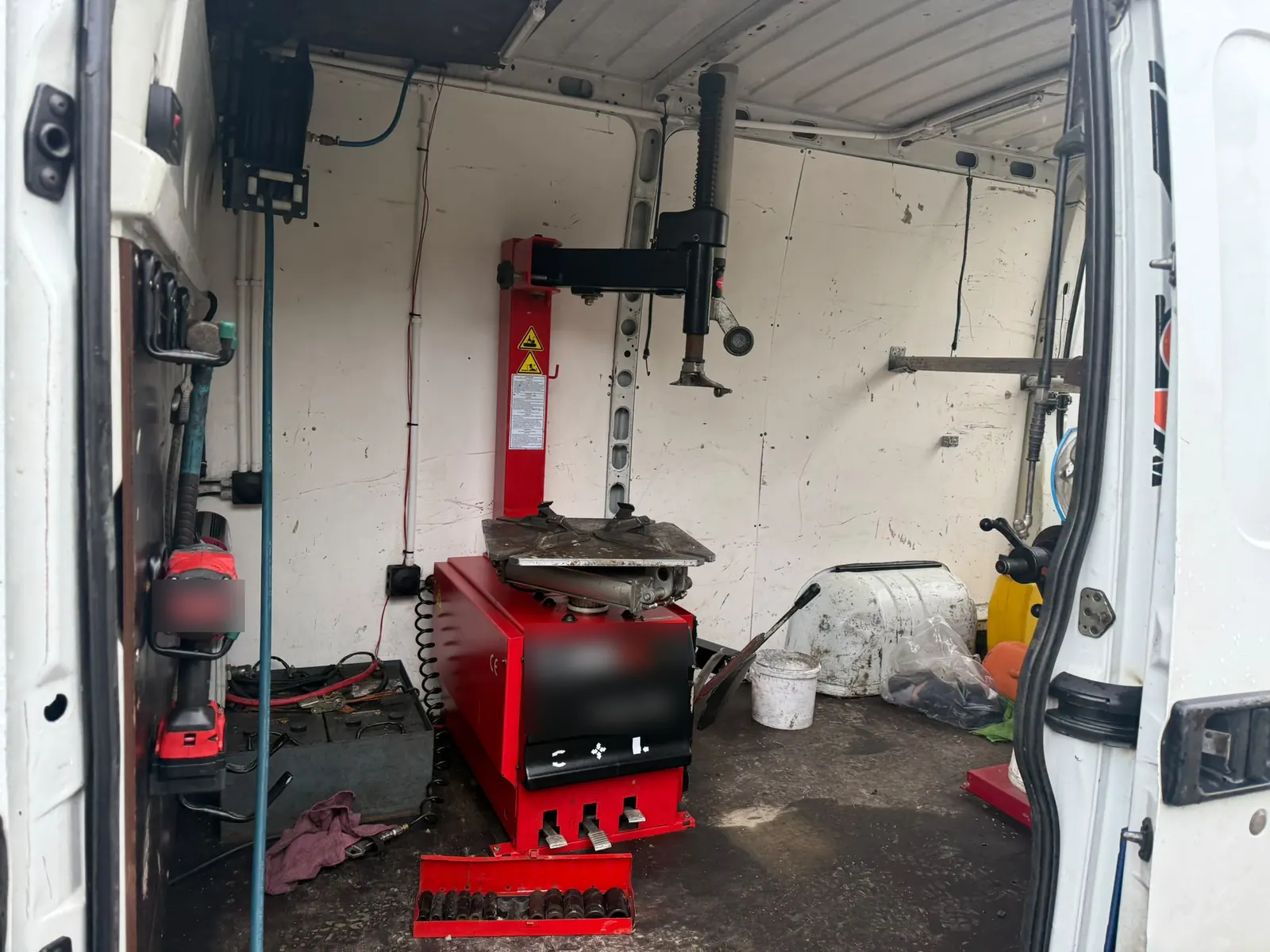
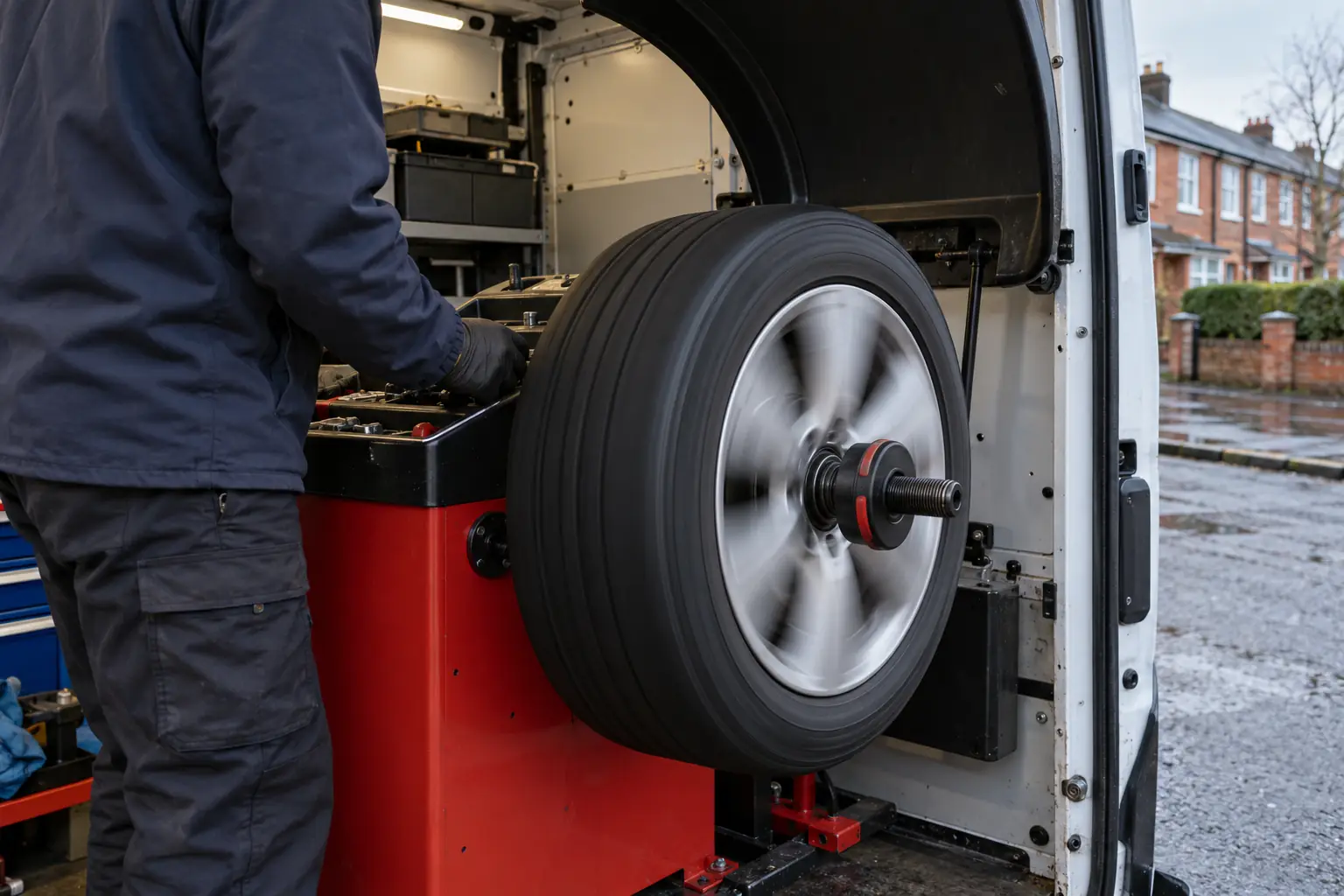
Mobile tyres or a trip to the tyre shop?
Both have their place. The tyre, the car and your day decide.
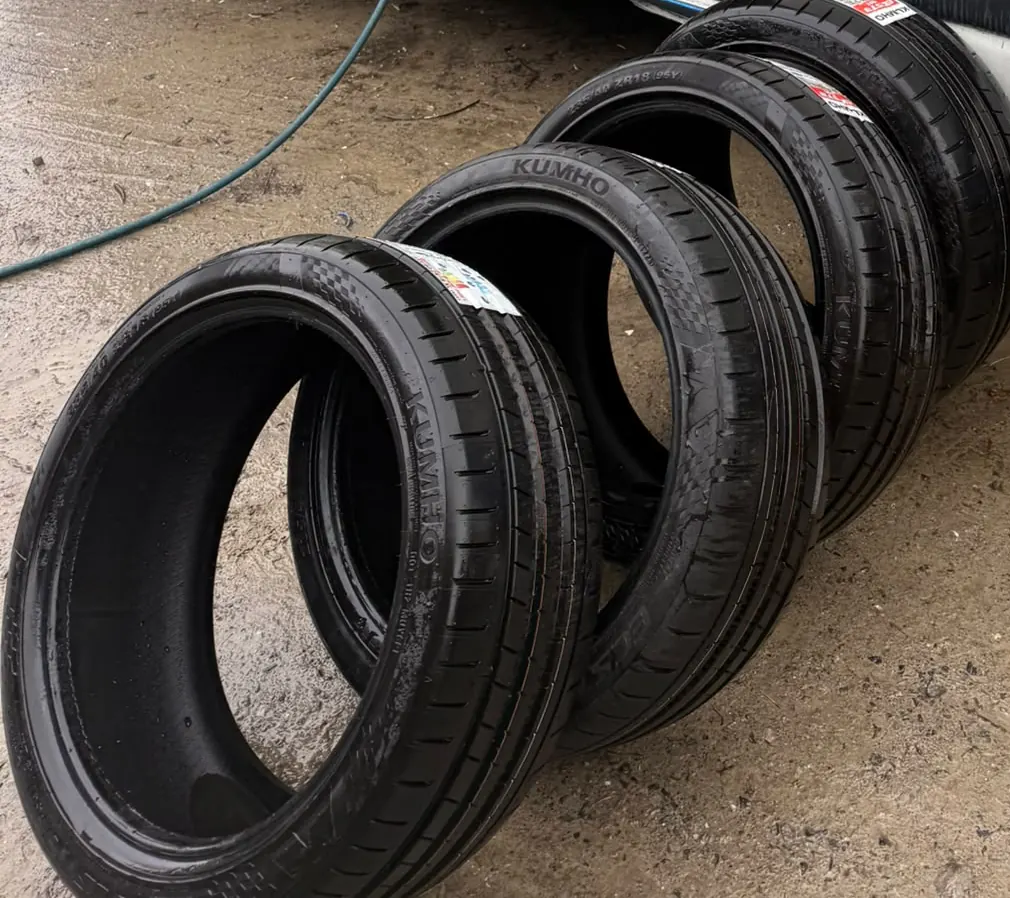
Most tyre jobs can be done in either place. The choice usually comes down to two questions: is the car safe to drive, and how much of your day can you give it? A few situations point clearly one way or the other.
When mobile tyres make the most sense
- The tyre is flat, cut or bulging, so driving to a shop would be unsafe or would damage the wheel
- You cannot easily leave work or home, or the school run is in the way
- It is a van that earns money every hour it is on the road
- There is no spare wheel, only a sealant kit, and the damage is more than sealant can handle
Even a short drive on a flat tyre can wreck a tyre that might otherwise have been repaired, and can mark or bend the rim. If the tyre is already down, having it seen where the car stands is often the safer choice.
For a business running a few vans, having the tyres done in the yard at a time agreed in advance keeps the vans earning. Our page on van tyres and small fleets lists what we need to know.
Potholes after a hard winter
A pothole strike can leave a bulge in the sidewall or a dent in the rim, sometimes days before the tyre loses any air. A bulge means the structure of the tyre is damaged, so it should be replaced rather than driven on. That is exactly the kind of job where a fitter at your door spares you a risky drive across the city.
When a garage is the better place
Some work needs a workshop. Wheel alignment is done on a fixed rig, so if the car pulls to one side, the steering wheel sits off centre or the inside edge of the tyres is wearing fast, book a garage that does alignment. The same goes for anything past the tyre and wheel: suspension, brakes, or a dashboard warning that is not about tyre pressure.
Comparing the price fairly
A shop price and a mobile price do not always cover the same things. Ask what is included: the tyre, fitting, balancing, a new valve, disposal of the old tyre and, for mobile work, the call-out. With us, the full price for the tyre, the call-out and the work is agreed on the phone before anything is booked.
Stock and the right tyre
A shop may have your size on the shelf, or may need to order it. A mobile fitter has to bring the correct tyre, so the size, load index and speed rating need to be right before anyone sets off. That is why we ask for the full marking from the sidewall, and why the tyre and its availability are confirmed when you call. Not sure where to look? Our guide to reading your tyre size shows you.
One tyre or two?
If one tyre is damaged and the other on the same axle is well worn, replacing both keeps the grip even across the axle. Tyres on the same axle should match in size and type. Check the tread on the other tyre with a gauge: the legal minimum in Ireland is 1.6mm, and our guide to tyre tread depth explains how to measure it.
With the NCT coming up
Tyre condition and tread depth are checked at the NCT. If your test date is close and the tread is near the limit, sorting the tyres a week or two ahead takes the pressure off the day itself.
Asking for mobile tyres in Dublin
If a fitter at your door suits your situation, call 087 452 4853 with the tyre size, the vehicle and the Eircode. For more detail, read about mobile tyre fitting.