Flat tyre and no spare wheel: your options
Plenty of newer cars leave the factory without a full-size spare.
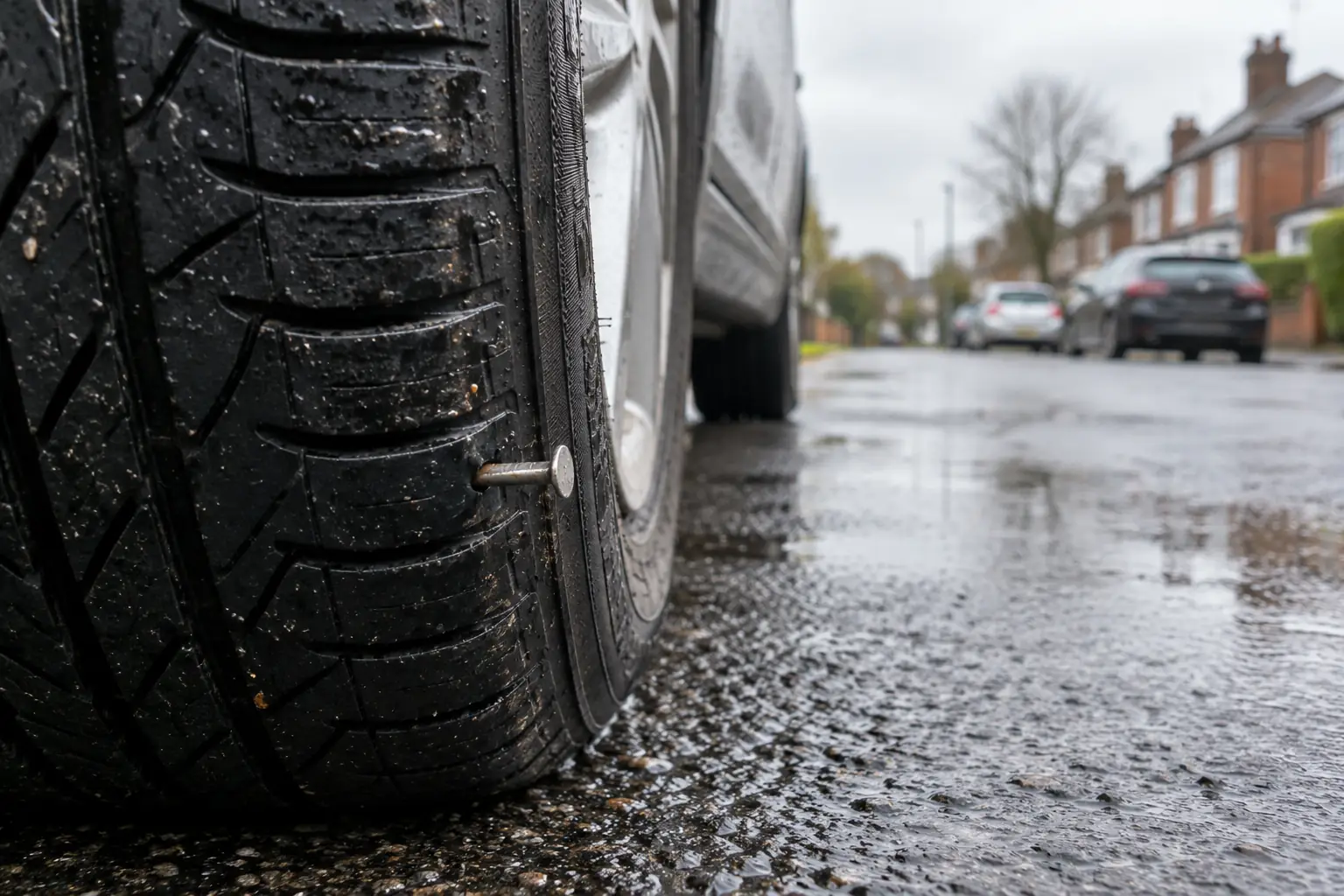
You walk out to the car and one tyre is flat. You open the boot and find a foam tray with a small compressor and a bottle of sealant, or a narrow space saver wheel, or nothing at all. All three are normal on cars sold today. Here is what each one means, and when it is better to leave the car where it is.
First, is the car somewhere safe?
If the tyre went flat on the road and the car is in a dangerous place, read what to do first with a flat tyre on the road. Everything below assumes the car is parked safely: on a driveway, at the kerb of a quiet street or in a car park.
The tyre sealant kit
A sealant kit pushes liquid into the tyre through the valve, then the compressor pumps it back up. It is meant for a small hole in the tread, the kind a nail or screw leaves. It will not seal a cut in the sidewall, a large gash or a tyre that has come away from the rim.
If you use one, read the label on the kit first. It normally sets a low top speed and a short distance, enough to reach help rather than to carry on as normal. Tell the tyre fitter that sealant went in, because the inside of the tyre and the wheel has to be cleaned out before any work, and some tyre makers and repairers will not repair a tyre once sealant has been used. If the car has pressure sensors inside the wheels, mention that as well.
The space saver spare
A space saver is a thin temporary wheel. It gets you moving, but it carries a speed limit printed on the wheel or on a sticker, often 80 km/h, and it is not built for long trips. On the M50 or a dual carriageway that means keeping to the left lane and under the limit on the label. Check its pressure now and then, because a space saver left in the boot for years is often low when you finally need it.
Fitting one on your own driveway is one thing. Doing it beside traffic is another, so only change the wheel yourself where there is room and no danger.
A warning light but no flat tyre
If the tyre pressure light comes on and no tyre looks flat, check all four with a gauge or at a petrol station air pump before deciding anything. A slow puncture often shows up this way, with one tyre a few psi below the others. Note which one, because it helps the fitter find the leak.
No spare at all
Some cars, including many on run-flat tyres, carry no spare and no kit. A run-flat can usually be driven a limited distance after losing pressure, as set out in the handbook, but that distance is there to get you off the road, not to put off the replacement. Our page on run-flat tyres has more.
When to leave it and call
- The sidewall is cut, bulging or torn
- The tyre has come off the rim, or was driven on while flat
- The wheel itself looks bent or cracked
- The sealant kit did not hold pressure after the first few minutes
- You are not sure the ground or the jacking point is safe
In any of these cases a mobile tyre fitter can deal with the tyre where the car is parked, so nobody drives on a damaged wheel to reach a garage.
What to tell us
Call 087 452 4853 with the Eircode, the make and model, the tyre size if you can read it, and which of the above you have: sealant used, space saver fitted or nothing in the boot. We tell you what can be arranged and agree the price before booking. Spotted a nail in the tread? It may be repairable, so read about our puncture repair checks first.